

Woman with jaw pain

Disorders of the jaw joint are known as craniomandibular dysfunction (CMD) or TMD.

Jaw joint disorders

Disorders of the jaw joint can show up in very different ways.

Many patients suffer from headaches, neck and/or back pain and limited mouth opening. Clicking joint noises, earache or dizziness can also occur. Sensitive, exposed tooth necks can be a sign of TMD, as can worn-down enamel on the biting surfaces (so-called abrasion).

Unconscious grinding or clenching at night is often the cause.

These symptoms are caused by changes in the chewing muscles or joint structure, often resulting from overloading of the masticatory system. In many cases this can be traced back to unconscious grinding and/or clenching at night or in stressful situations during the day. Missing or misaligned teeth can also place uneven strain on the jaw joint.

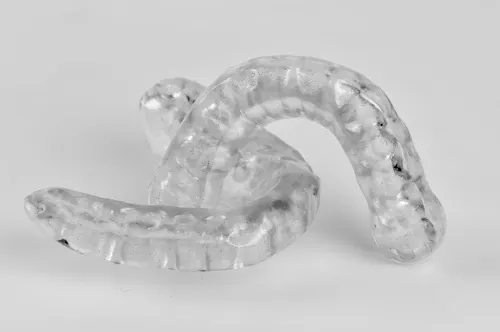
Clear bite splint

How does a bite splint help?

Your benefits

  • Protects the teeth
  • Relaxed jaw position

Successful treatment starts with a thorough examination of the jaw, muscles and jaw joints. Only then can an individual treatment plan be drawn up with the aim of restoring balance between the muscles and the joints.

In many cases this is achieved with a custom-made acrylic bite splint worn at night, which brings the jaw joint into a relaxed, anatomically favourable position. At the same time it protects the teeth from further wear caused by grinding or clenching.

Physiotherapy can be a helpful addition. In some cases rebuilding damaged teeth or orthodontic correction of misalignments may also be necessary.

Feel free to ask us if you would like to know more about how to keep your teeth healthy and beautiful for life.

Any questions, or would you like to book an appointment?

Book anappointment